Invisalign attachments are small, tooth-coloured shapes temporarily bonded to selected teeth. They help clear aligners grip the teeth and apply pressure in a more controlled direction. Not every patient needs the same attachments. Their number, shape and location depend on the movements planned by the orthodontist.
At Heinrichs Orthodontics, Invisalign treatment is planned around the patient’s complete bite rather than using one standard attachment pattern.
What Do Invisalign Attachments Look Like?
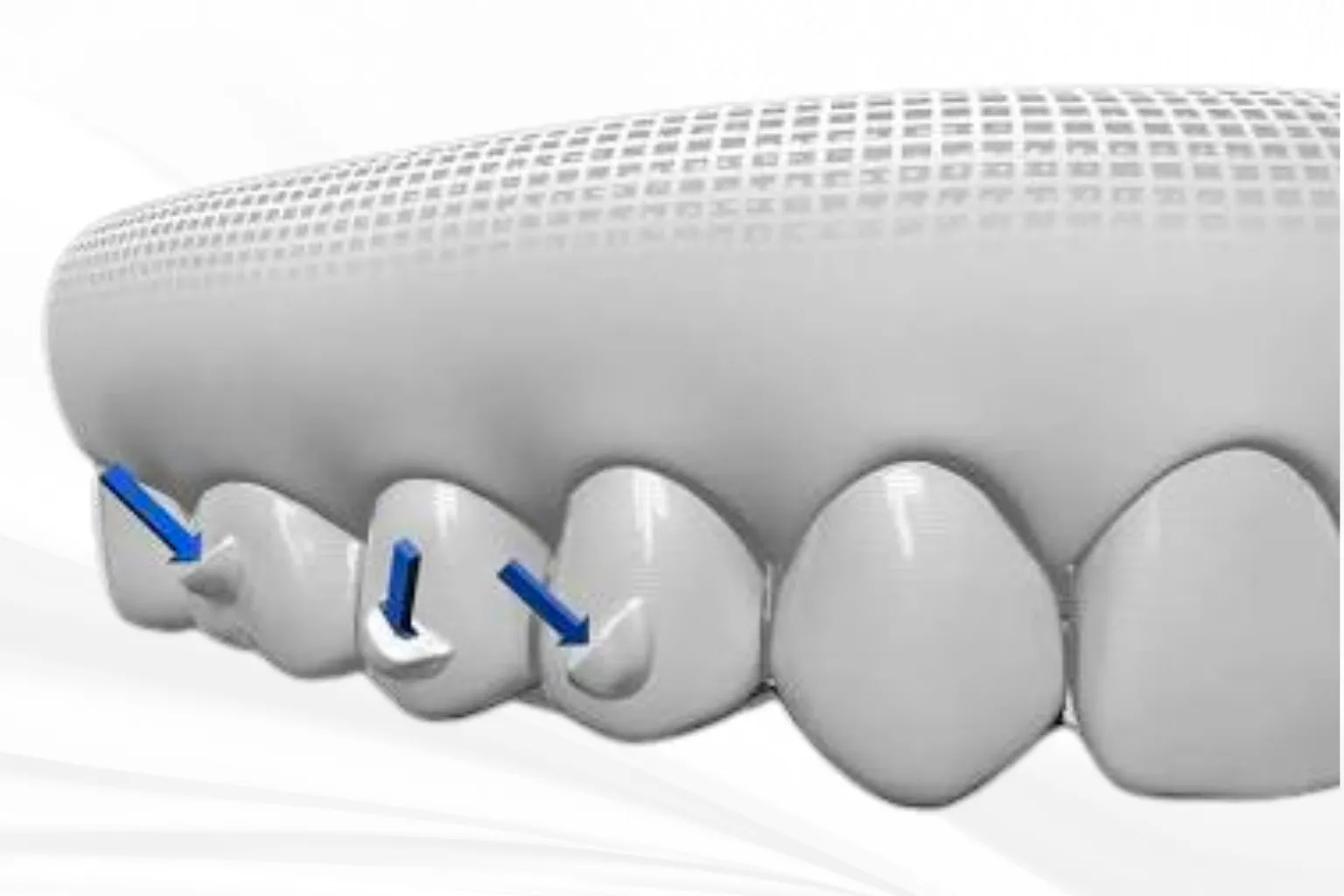
Attachments are sometimes described as small bumps on the teeth. They are usually made from tooth-coloured dental composite, similar to material used in some dental fillings.
Their appearance varies because different shapes can perform different jobs. An attachment may be:
- Rectangular.
- Square.
- Rounded.
- Angled.
- Wider or narrower.
- Positioned vertically or horizontally.
Attachments are designed to work with the matching spaces built into the aligner. When the aligner is placed over the teeth, it fits around each attachment.
The attachment itself does not move the tooth. It gives the aligner a better surface to push against.
Invisalign describes its attachments as small, tooth-coloured shapes that help aligners apply additional force. Invisalign’s attachment guide provides a general explanation.

What Do Invisalign Attachments Do?
A smooth tooth does not always give an aligner enough grip for a complex movement. Attachments can improve control.
They may help with several movements.
Rotating a Tooth
Some teeth are rounder than others. A clear aligner may have difficulty gripping a rounded tooth well enough to rotate it.
An attachment creates another contact point. This can help the aligner apply pressure in the planned direction.
Moving a Tooth Up or Down
Certain cases require a tooth to move farther into the gum or outward into the bite. These are more complex movements than simple tipping.
Attachments may help the aligner hold the tooth while applying the planned force.
Controlling the Root
The visible crown is only one part of a tooth. Orthodontic treatment must also consider the root below the gum.
An attachment may help improve control over both the crown and root during selected movements.
Supporting Bite Correction
Attachments can work with aligners, precision features or elastics to improve how the upper and lower teeth meet.
A systematic review of aligner attachments found that attachments can improve aligner retention and the expression of orthodontic movement. Their effectiveness still depends on design, position and the movement being attempted.
Does Everyone Need Attachments with Invisalign?
No. Some simple cases may need few attachments. Other cases may require attachments on several teeth.
The decision may depend on:
- Which teeth need to move.
- How far they need to move.
- Whether teeth need rotation.
- Whether roots need additional control.
- The type of bite problem.
- Whether elastics will be used.
- The overall treatment sequence.
Two people with similar-looking front teeth may receive different attachment plans. Their roots, bite and available space may not be the same.
This is why an orthodontic examination is important. The goal is not to place as few attachments as possible. The goal is to use the features needed for controlled treatment.
You can learn how the rest of the process works in our guide to what patients should expect during clear-aligner treatment.

How are Invisalign Attachments Placed?
Attachment placement is normally completed during an office visit.
The general process may include:
- Cleaning and preparing the selected teeth.
- Placing tooth-coloured composite into an attachment template.
- Positioning the template over the teeth.
- Hardening the material with a dental curing light.
- Removing the template.
- Checking the shape and fit of the attachments.
- Trying in the aligner.
Placement does not normally involve drilling into the tooth. Most patients feel pressure while the template and aligner are fitted, but attachment placement itself is usually straightforward.
The exact process may differ depending on the case.
Do Invisalign Attachments Hurt?
Attachments should not create the same type of pressure as an aligner because they are bonded shapes rather than active appliances.
However, patients may notice:
- A rough or unfamiliar feeling when the aligners are removed.
- Extra tightness when inserting a new aligner.
- More resistance when taking an aligner out.
- Temporary cheek or lip awareness.
- Mild tooth tenderness from the active aligner.
These sensations often become easier to manage as the patient becomes familiar with the routine.
If an attachment feels sharp, interferes with the bite or causes continuing irritation, contact the orthodontic office. Do not file or alter it at home.
Will Attachments Make Invisalign More Noticeable?
Attachments can make Invisalign slightly more visible. How noticeable they are depends on:
- The number of attachments.
- Their location.
- The shade of the composite.
- Lighting.
- The natural colour of the teeth.
- Whether elastics are also being used.
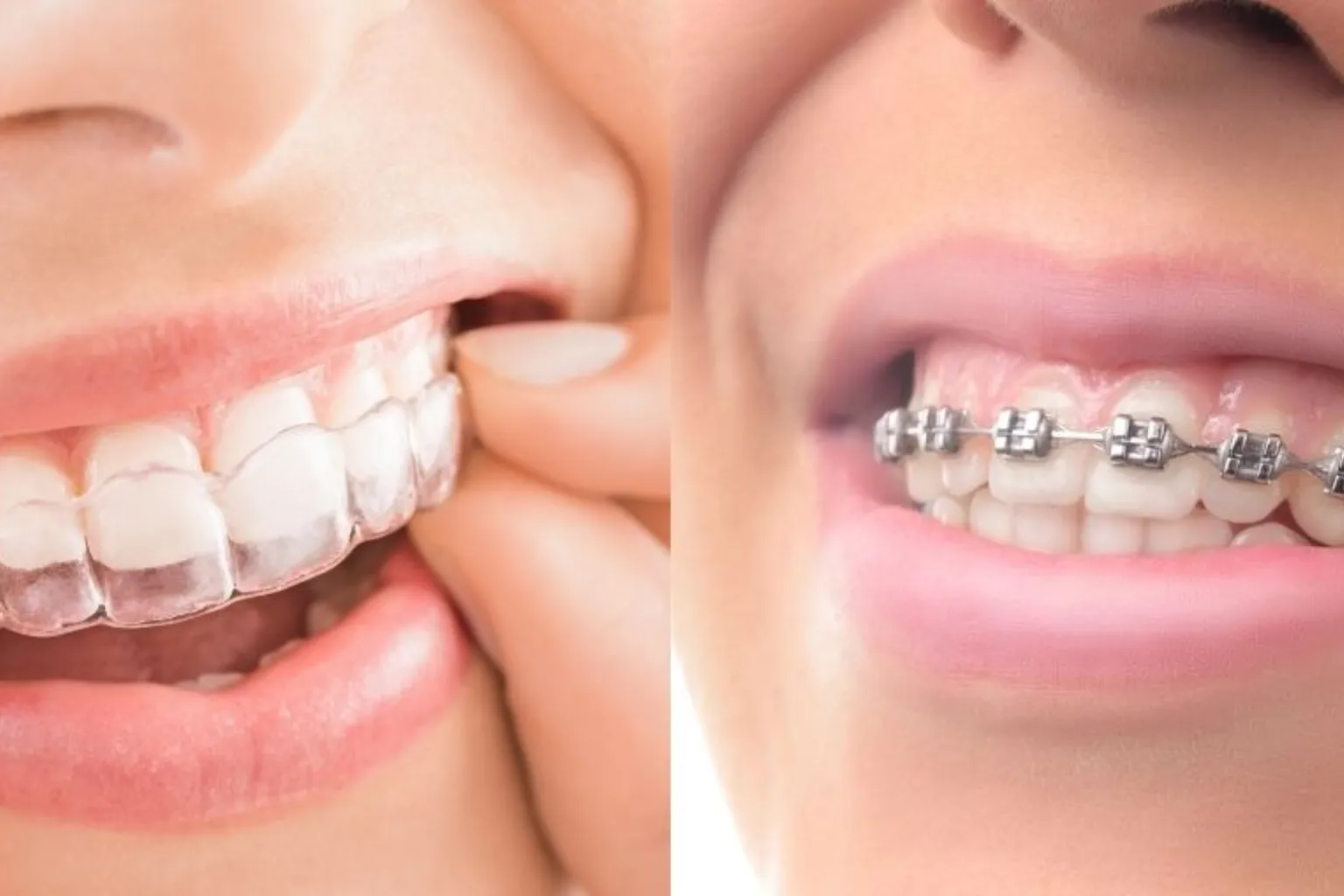
Attachments on front teeth may be easier to see than attachments farther back. Even so, many patients still consider the system less noticeable than conventional brackets and wires.
If appearance is a major concern, discuss it during the treatment consultation. Dr. Heinrichs can explain which attachments are clinically useful and where they may be placed.
Explore the full benefits and limitations of Invisalign treatment in Saskatoon.
Reveal Your Invisalign Options—100% Free
How do you eat with Invisalign attachments?
Remove the aligners before eating unless Dr. Heinrichs provides different instructions.
After removing them:
- Store the aligners in their case.
- Eat without the trays in place.
- Brush or clean the teeth before replacing the aligners.
- Rinse the trays if needed.
- Put the aligners back in promptly.
Attachments remain on the teeth during meals. Hard foods should be approached carefully because an attachment can occasionally come loose.
Do not place aligners in a napkin. They can easily be thrown away. Pets may also damage aligners left within reach.
How Do You Brush and Floss Around Attachments?
Attachments add small edges where plaque may collect. Good oral hygiene remains important.
Follow these habits:
- Brush at least twice daily with fluoride toothpaste.
- Clean around every attachment.
- Floss or use another recommended interdental cleaner daily.
- Brush after meals when practical.
- Keep the aligners clean.
- Continue regular visits with your general dentist.
The American Dental Association recommends brushing twice daily with a soft-bristled brush and fluoride toothpaste. It also recommends daily cleaning between the teeth. Review the ADA brushing guidance.
What Happens If an Attachment Falls Off?
An attachment can sometimes come loose. You may notice that a bump has disappeared or that the aligner feels different around one tooth.
Do not glue it back on. Continue following your current instructions and contact the office.
The orthodontic team will decide whether:
- It should be replaced soon.
- It can wait until the next scheduled visit.
- The current aligner should still be worn.
- A fit or tracking check is needed.
The correct response depends on which attachment was lost and what movement it was supporting.
Patients can also use the practice’s virtual consultation option when appropriate, although the team may still recommend an in-person visit.
How Are Attachments Removed?
Attachments are removed after they are no longer required. The orthodontist carefully takes away the composite and smooths the tooth surface.
Patients should not attempt to remove attachments themselves. Home removal can harm the tooth surface or leave composite behind.
Some attachments may be removed before the end of treatment. Others may remain until the active aligner stage is complete.
Why Does Orthodontic Supervision Matter?
Attachments are part of a larger biomechanical plan. Their shapes and locations should correspond with the required movements.
An orthodontist also checks:
- Whether the aligners fit around the attachments.
- Whether the teeth are tracking as planned.
- Whether attachments remain secure.
- Whether the bite is changing safely.
- Whether refinements are needed.
Read more about why an orthodontist should supervise clear-aligner treatment and explore the practice’s complete orthodontic treatment options.
Frequently Asked Questions
Can Invisalign work without attachments?
Some cases can use few or no attachments. More complex movements may require them for improved grip and control.
How many attachments will I need?
The number varies. It depends on the teeth being moved and the complexity of the treatment plan.
Can Invisalign attachments fall off?
Yes, an attachment can occasionally loosen. Contact the orthodontic office for instructions rather than trying to replace it yourself.
Do attachments stain?
The composite may become more noticeable if plaque or surface stains collect around it. Careful cleaning can help.
Can I eat normally with attachments?
Aligners are normally removed for meals. The attachments stay on the teeth. Follow the orthodontist’s advice about very hard foods.
Do Invisalign attachments damage enamel?
They are designed to be bonded and professionally removed. Safe placement and removal require appropriate clinical technique.
Are attachments removed after treatment?
Yes. They are removed when they are no longer needed.