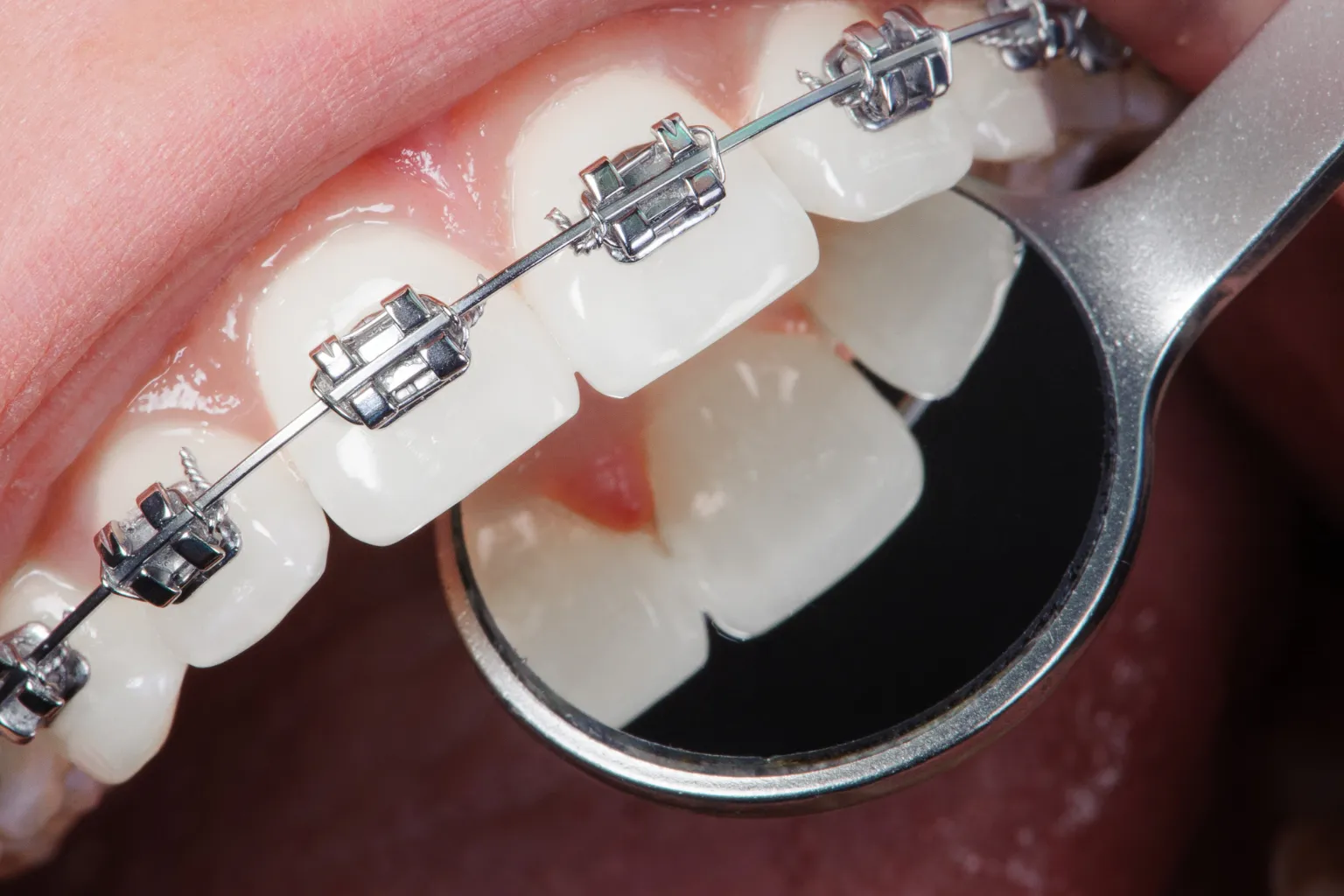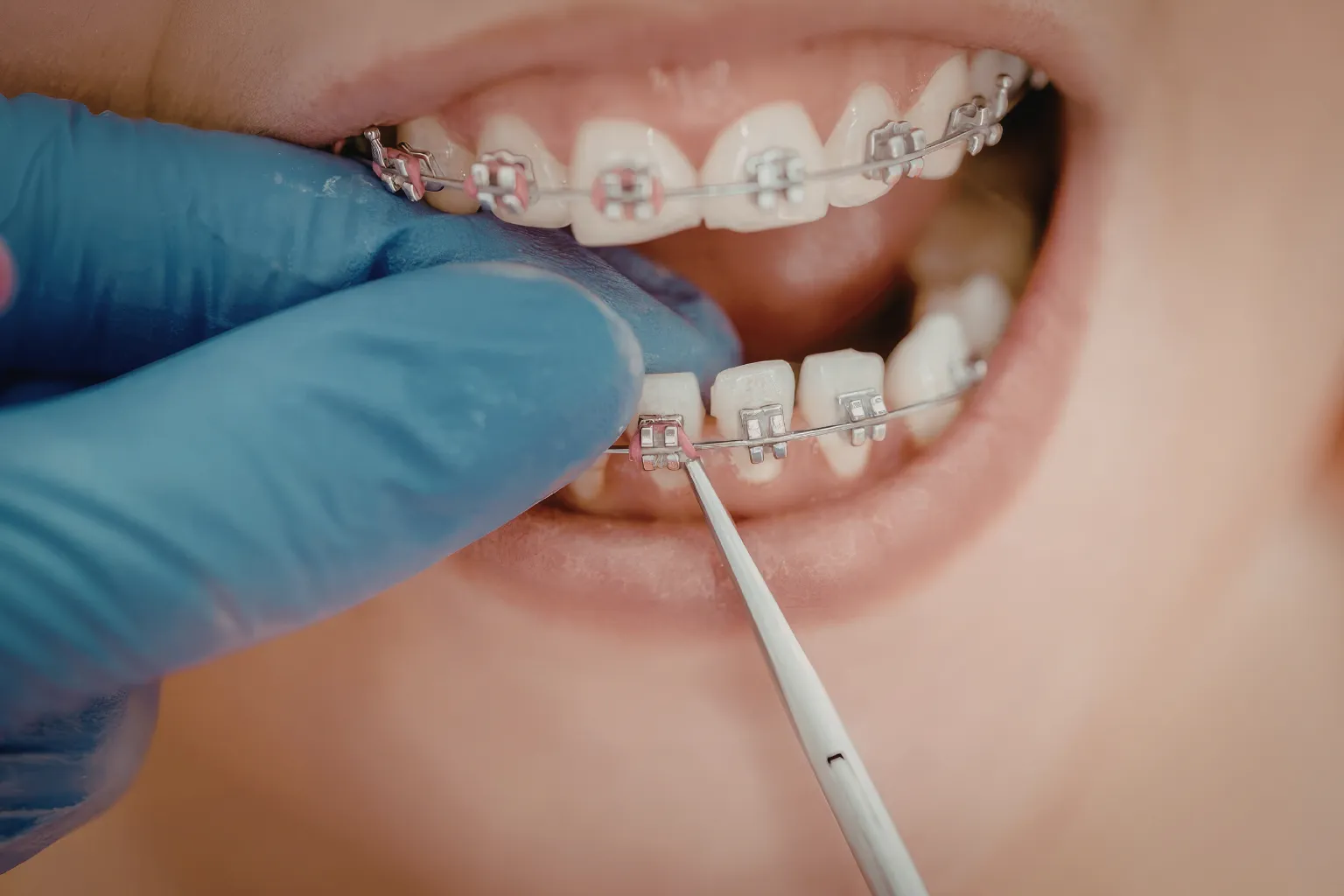

Yes. Many adults can get braces or Invisalign with crowns, implants, bridges, or missing teeth. A crowned natural tooth can often be moved because its root remains in the jaw. A dental implant cannot move like a natural tooth. Treatment may therefore require careful planning between your orthodontist, dentist, and other dental specialists.
Existing dental work does not automatically rule out orthodontics. It changes the questions that must be answered before treatment begins.
At Heinrichs Orthodontics, each adult treatment plan is based on an examination, dental history, images, gum and bone health, and the long-term restorative plan.
Can Braces Be Attached to Crowned Teeth?
A dental crown covers a natural tooth that has been repaired or restored. The tooth still has a root surrounded by the tissues that allow orthodontic movement.
In many cases, an orthodontist can move a crowned tooth. However, attaching a bracket may require a different bonding method than attaching one to natural enamel.
Important factors include:
- What the crown is made from
- The crown’s condition
- The health of the tooth beneath it
- Root shape and position
- Gum and bone support
- The direction and amount of movement
- Whether the crown will remain after treatment
A bracket can occasionally come loose from a restoration more easily than from natural enamel. This does not necessarily mean the crown is damaged. The orthodontic team can evaluate the bracket, bonding surface, and restoration.
Can Invisalign Move a Tooth With a Crown?
Invisalign may move a crowned natural tooth because the aligner applies force to the tooth and its root, not only to the visible crown.
Some movements require small attachments bonded to the teeth. Whether an attachment can be placed on a particular crown depends on the restorative material and treatment plan.
Your orthodontist may:
- Change the shape or location of an attachment
- Use a different movement sequence
- Avoid bonding to a specific surface
- Coordinate with your dentist
- Recommend braces if they offer better control for the case
Read more about how Invisalign treatment in Saskatoon is planned and supervised.
Can a Dental Implant Move During Orthodontic Treatment?
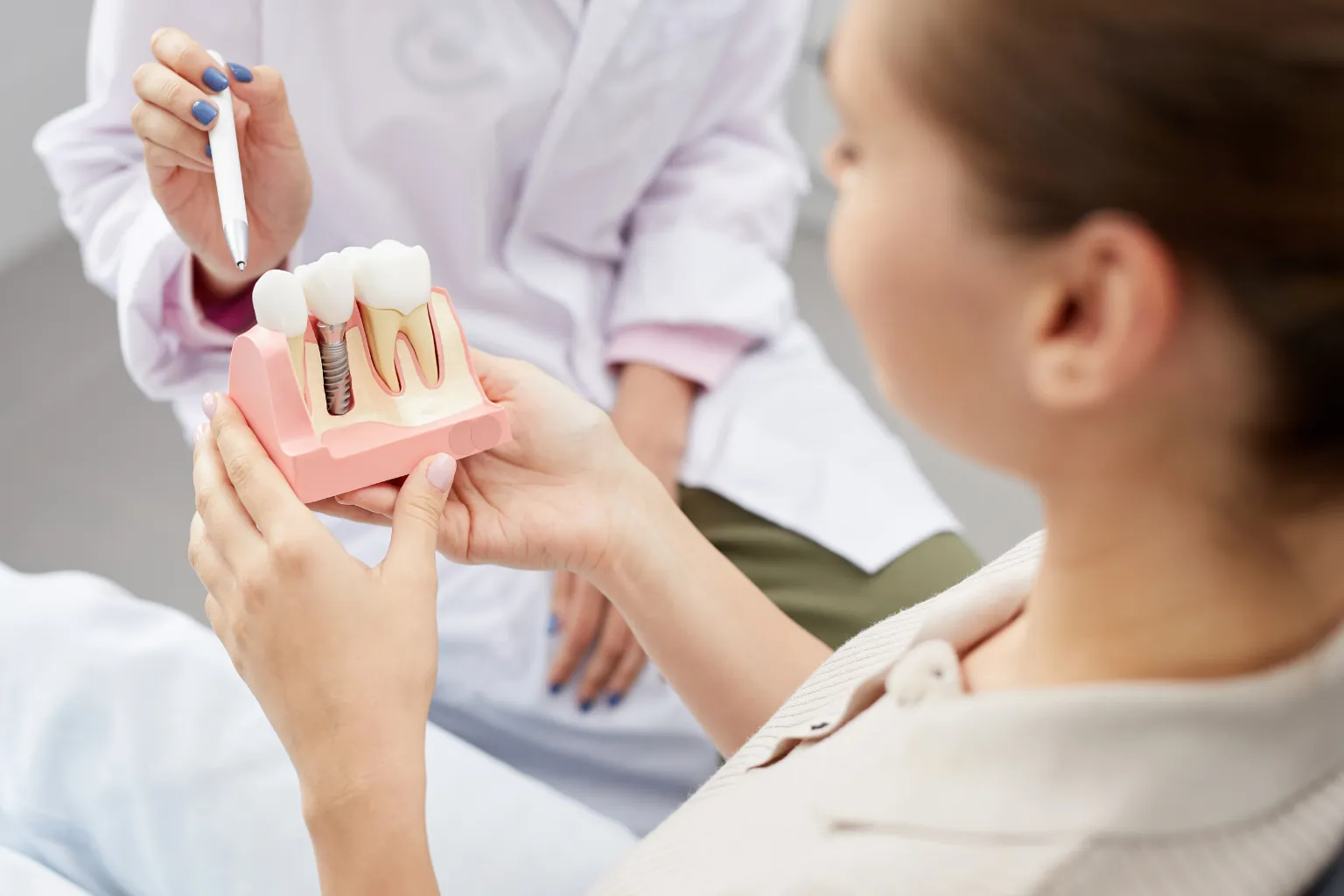
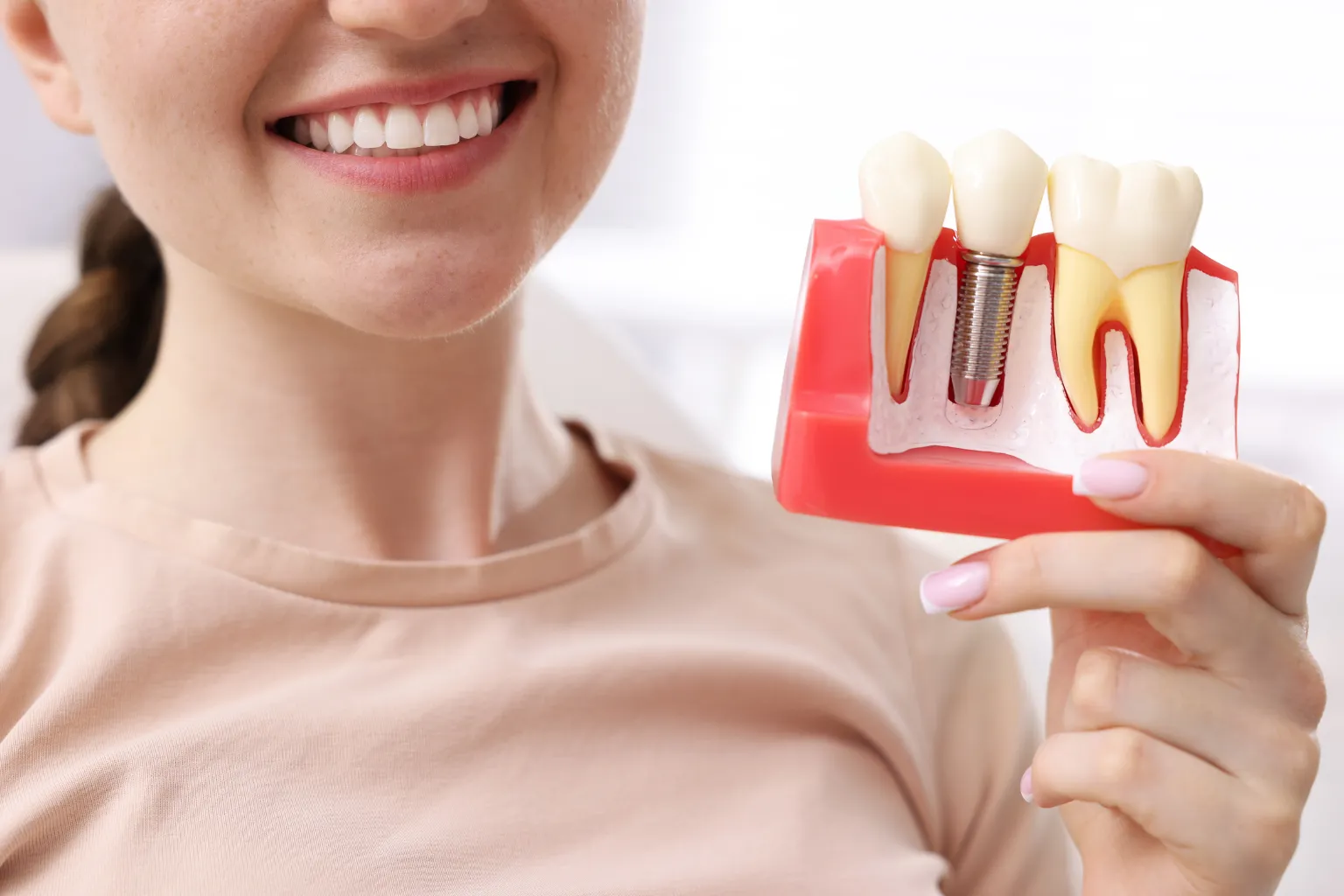
A dental implant is different from a natural tooth. A natural tooth is connected to the surrounding bone by a periodontal ligament. This ligament helps make orthodontic tooth movement possible.
An implant becomes joined to the jawbone through a process called osseointegration. It does not have the same ligament and cannot be moved with conventional orthodontic forces.
The American Association of Orthodontists’ glossary states that dental implants cannot be moved by conventional orthodontic forces.
An implant may sometimes be used as a stable anchor while nearby natural teeth are moved. That can be useful, but only when its position supports the complete treatment plan.
Can You Get Invisalign With Dental Implants?
Having an implant does not automatically prevent Invisalign treatment. The aligners can move natural teeth around the implant while the implant remains fixed.
The plan must account for:
- The implant’s exact position
- The size and shape of its crown
- The bite around the implant
- The movement needed in nearby teeth
- Available space
- Gum and bone health
If the implant was placed before the surrounding teeth were aligned, its fixed position may limit some treatment choices. Digital planning can help the orthodontist determine what is realistic.
How Can Orthodontics Help When Teeth Are Missing?
When a tooth is missing, nearby teeth may lean or drift into the open space. The opposing tooth can also move because it no longer meets a tooth in the other arch.
Orthodontic treatment may be used to:
- Close the space
- Open the correct amount of space for a replacement
- Straighten tilted teeth
- Align roots before implant placement
- Improve the bite around a future bridge
- Balance spaces on both sides of the mouth
The British Orthodontic Society notes that orthodontic treatment can help upright teeth and roots to create suitable space for implants and restorative treatment. Adult orthodontics may therefore be one part of a larger dental plan.
Whether a gap should be opened or closed depends on the missing tooth, bite, facial balance, bone, tooth shape, and patient goals.
Should an Implant Be Placed Before or After Orthodontics?
When possible, the dental and orthodontic teams often plan the final tooth positions before an implant is placed. Because an implant cannot move, placing it too early may limit the orthodontist’s options.
A common sequence may be:
- Assess the teeth, roots, bite, gums, and bone.
- Decide whether the missing-tooth space should be opened, closed, or maintained.
- Complete the required orthodontic movement.
- Confirm the final implant space and root positions.
- Have the appropriate dental professional place and restore the implant.
- Use retainers to protect the tooth positions.
This is an example, not a universal order. Some patients already have implants before starting orthodontics. Others may need different sequencing because of bone health, tooth condition, age, or restorative needs.
The AAO explains that crowns, bridges, and implants may be easier to complete after the remaining teeth and bite are properly aligned. See its answer about orthodontics before replacing missing teeth.
What About Dental Bridges?
A traditional bridge connects replacement teeth to supporting teeth. Because the parts are joined, moving one supporting tooth separately can be difficult or impossible without changing the bridge.
Depending on the case, the dentist and orthodontist may consider:
- Keeping the bridge in place
- Temporarily altering or sectioning it
- Replacing it after orthodontic treatment
- Choosing a different movement plan
- Using another restoration during treatment
Do not assume an existing bridge must be removed. It needs to be examined as part of the complete plan.
Braces or Invisalign: Which Is Better With Restored Teeth?
Neither option is automatically better.
Braces may be considered when:
- Detailed movement control is needed
- Several teeth require complex movement
- Patient wear time would be difficult
- The orthodontist wants direct control of particular teeth
Learn about modern metal braces.
Invisalign may be considered when:
- The planned movements are suitable for aligners
- Removable trays would make cleaning easier
- The patient can follow the wear schedule
- The restorations allow reliable aligner fit and attachment planning
Treatment choice depends on the full bite—not simply whether one tooth has a crown.
Why Gum and Bone Health Matter
Healthy support around the teeth is important before orthodontic forces are applied. Adults are more likely than children to have previous restorations, gum recession, bone loss, root canal treatment, or missing teeth.
Before treatment, the dental team may need to address:
- Active gum disease
- Tooth decay
- Loose or failing restorations
- Infection
- Poorly fitting crowns
- Areas with limited bone support
Adults should continue routine dental examinations and cleanings throughout orthodontic treatment.
For a broader explanation of treatment at different ages, visit orthodontics for all ages.
How Your Dentist and Orthodontist Work Together
Your general dentist manages your overall dental health and restorations. Your orthodontist diagnoses tooth and jaw alignment and plans tooth movement.
Complex cases may also involve:
- A periodontist for gums and supporting bone
- A prosthodontist for advanced restorative planning
- An oral surgeon for extractions or implant placement
- An endodontist for root canal concerns
The goal is to agree on the final result before treatment begins. Patients can help by bringing recent dental records and explaining any planned crowns, bridges, or implants.
Our existing article, Can I still get braces as an adult?, covers the broader reasons adults consider treatment. You can also read What is orthodontic treatment? for an overview of how teeth and bites are corrected.
Have crowns, implants, or missing teeth?
Book a consultation with Dr. Heinrichs and bring information about your existing and planned dental work.
Frequently Asked Questions
Can braces damage a crown?
Brackets can often be bonded to crowns, but restorative materials behave differently from enamel. The orthodontist evaluates the crown and selects an appropriate approach.
Will Invisalign attachments stick to crowns?
Sometimes. Bonding depends on the crown material and attachment design. An orthodontist may modify the plan if reliable bonding is uncertain.
Can braces close a missing-tooth gap?
In some cases, yes. In other cases, opening or maintaining space for a replacement produces a better bite. The decision requires a complete diagnosis.
Can Invisalign move a dental implant?
No. An osseointegrated implant does not move like a natural tooth. Invisalign may move natural teeth around it.
Will I need a new crown after orthodontics?
Not always. A crown may need replacement if its shape, fit, colour, or bite no longer suits the final tooth position. Your dentist and orthodontist should plan this together.
Can older adults with dental work get braces?
Many can. Age alone is not the deciding factor. Tooth, gum, bone, and general dental health are more important.