Invisalign can fix many tooth-related overbites, underbites, crossbites and open bites. However, the answer depends on what is causing the bite problem. Clear aligners may work well when teeth need to be repositioned. A problem involving significant jaw growth or jaw position may require braces, another appliance or coordinated treatment.
At Heinrichs Orthodontics, each patient receives an individual assessment. Dr. Dean Heinrichs examines the teeth, jaws and bite before recommending Invisalign or another treatment.
What Bite Problems Can Invisalign treat?
A bite problem happens when the upper and lower teeth do not meet correctly. Orthodontists call this a malocclusion.
Invisalign may be used to treat several types of bite problems:
- Overbite: The upper front teeth cover too much of the lower front teeth.
- Underbite: Some or all of the lower teeth sit in front of the upper teeth.
- Crossbite: One or more upper teeth sit inside the lower teeth.
- Open bite: The upper and lower teeth do not touch in one area when the mouth closes.
- Crowding: There is not enough room for the teeth to sit in their proper positions.
- Spacing: There are unwanted gaps between teeth.
A person may have more than one of these concerns. For example, someone may have crowding along with an overbite.
According to the American Association of Orthodontists, clear aligners apply planned pressure to move teeth. Their suitability depends on the patient’s diagnosis and treatment needs.
How Does Invisalign Correct a Bite?
Invisalign treatment uses a series of custom-made clear aligners. Each aligner is shaped to guide selected teeth through a small part of the treatment plan.
Treatment normally follows this process:
- The orthodontist examines the teeth and bite.
- Digital scans, photographs and X-rays may be taken.
- The orthodontist creates a detailed movement plan.
- A series of aligners is produced for that plan.
- The patient changes aligners according to the prescribed schedule.
- Progress is checked during follow-up visits.
The aligners must be worn consistently. They cannot guide teeth while they are sitting in their case.
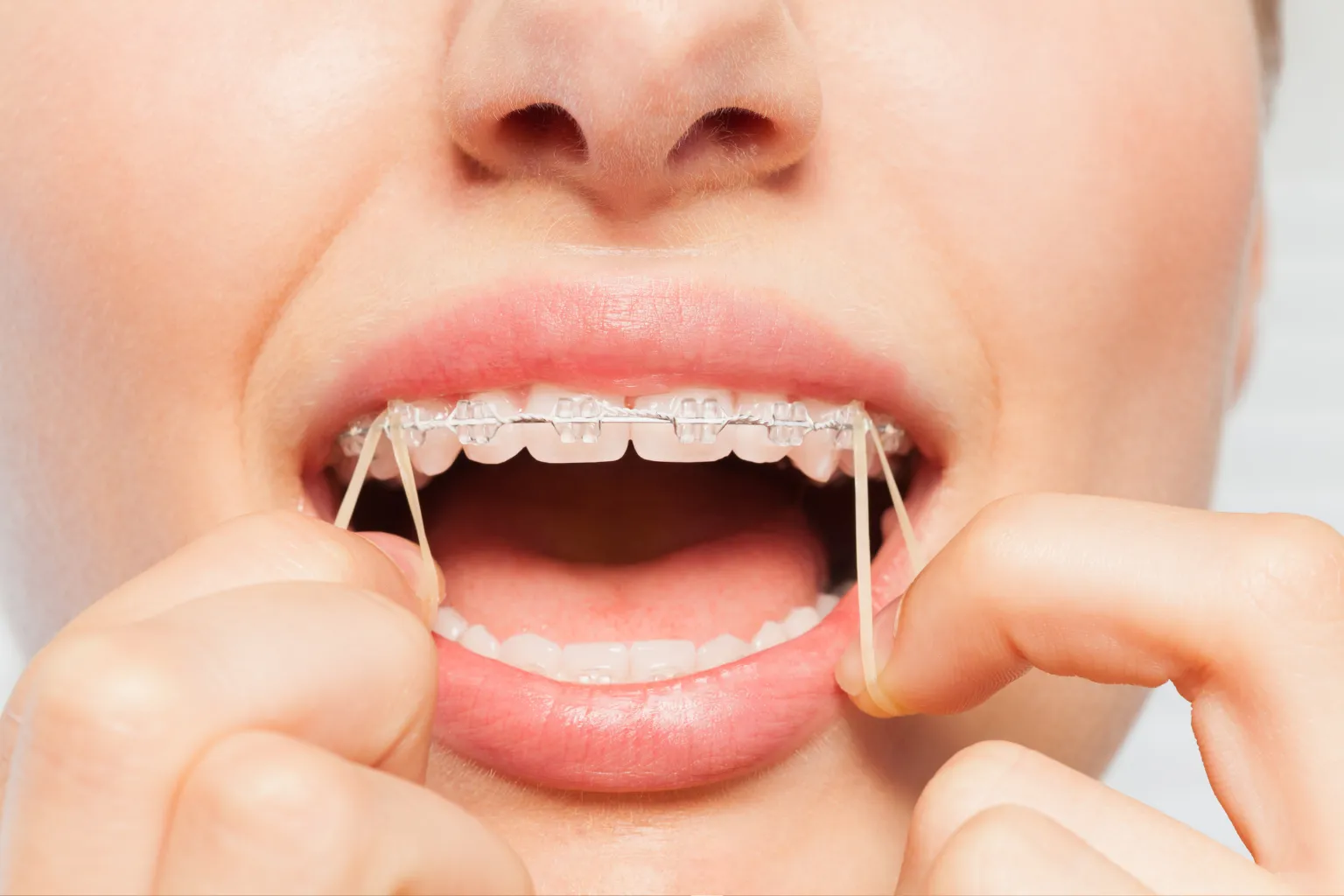
Some movements may also require attachments or elastics. These features give the orthodontist greater control over how teeth and the bite change.
You can learn more about the full process in our guide to what to expect during clear-aligner treatment.
Can Invisalign Fix an Overbite?
Invisalign can correct many dental overbites. A dental overbite is mainly related to the position of the teeth.
Aligners may be planned to:
- Move selected front teeth.
- Adjust the position of back teeth.
- Improve how the upper and lower teeth meet.
- Create space when appropriate.
- Work with elastics or attachments for added control.
An overbite may also involve the size or position of the jaws. These cases need a more detailed assessment. The patient’s age and remaining growth may affect the recommended approach.
Patients should not assume that an overbite can be corrected simply by moving the visible front teeth. A healthy result also depends on how the back teeth meet and how the bite functions.
Can Invisalign Fix an Underbite?
Invisalign may help with certain underbites, especially when tooth position is a major part of the problem.
An underbite can develop when:
- Lower teeth lean too far forward.
- Upper teeth lean too far back.
- The lower jaw is positioned farther forward.
- The upper jaw has not developed as expected.
- Dental and skeletal factors occur together.
When an underbite is mainly caused by jaw position, aligners alone may not be enough. A growing child may benefit from treatment timed around development. A severe adult case may require another form of coordinated care.
The goal is not just to make the front teeth look aligned. Treatment should improve the way the whole bite works.

Can Invisalign Fix a Crossbite?
Invisalign can be used for some front and back crossbites. The recommended treatment depends on how many teeth are involved and whether the upper jaw is narrow.
A crossbite should be assessed carefully because it may lead to uneven tooth contact. In some cases, aligners can move the affected teeth into better positions. Other cases may need expansion, elastics, braces or another appliance.
Children and adults may receive different recommendations. A child’s jaws are still developing, while adult treatment must work with established bone structures.
Parents who are concerned about their child’s bite can also read our guide explaining what age a child should first see an orthodontist.
Can Invisalign Fix an Open Bite?
Invisalign may correct some open bites by changing the position of selected teeth. However, the cause of the open bite matters.
Possible contributing factors include:
- Tooth position.
- Jaw growth.
- Tongue posture.
- Long-term oral habits.
- A combination of dental and skeletal factors.
Attachments or elastics may be included in the plan. The orthodontist may also need to consider habits that could affect long-term stability.
Because open bites can have several causes, an examination is more reliable than judging the problem from a photograph.
When are Invisalign Attachments or Elastics Needed?
Attachments are small, tooth-coloured shapes placed on selected teeth. They help the aligners grip the teeth and apply force more precisely.
Research on aligner biomechanics has found that attachments can improve aligner retention and the expression of certain movements. However, the design and placement must match the movement being planned. A 2023 systematic review examined how attachments affect clear-aligner treatment.
Elastics may also be prescribed when the upper and lower teeth need to move in relation to each other.
Not every patient needs the same attachments or elastic pattern. Patients should only wear elastics in the positions and for the number of hours prescribed by their orthodontist.
When Might Braces be Recommended Instead?
Invisalign is versatile, but it is not automatically the best choice for every patient.
Braces may be recommended when:
- The required tooth movements are especially complex.
- Teeth need more consistent control.
- The patient is unlikely to wear removable aligners as directed.
- The bite problem involves significant jaw differences.
- Another orthodontic appliance needs to be combined with treatment.
- The orthodontist expects braces to provide a more predictable result.
Modern metal braces in Saskatoon remain an effective option for many alignment and bite problems.
The choice should be based on diagnosis, not only appearance or convenience. Our article on factors to consider when choosing orthodontic treatment explains this decision in more detail.
How Does an Orthodontist Determine Whether Invisalign Will work?
A proper assessment looks beyond the visible position of the front teeth.
Dr. Heinrichs may evaluate:
- Tooth alignment.
- How the upper and lower teeth meet.
- Jaw relationships.
- Gum and bone health.
- Missing or unerupted teeth.
- Available space.
- Age and remaining growth.
- Previous dental treatment.
- The patient’s ability to follow the wear schedule.
Digital records allow these details to be studied before treatment begins. Dr. Heinrichs then explains which options are suitable and why.
This individual planning is one reason to choose orthodontist-supervised care. Read more about why patients should see an orthodontist for clear aligners.
Invisalign Treatment in Saskatoon
Invisalign may offer a removable and less noticeable way to correct tooth alignment and certain bite problems. But successful treatment begins with the right diagnosis.
Dr. Heinrichs has specialist training in orthodontics and an interest in complex Invisalign treatment planning. You can review his education and professional background on the Meet Dr. Heinrichs page.
Unlock Your Free Smile Assessment
Frequently asked questions
Can Invisalign completely fix an overbite?
It may correct many dental overbites. Results depend on the severity of the problem and whether it involves the teeth, jaws or both.
How long does Invisalign take to correct a bite?
There is no single timeline. The type of bite problem, required movements, wear time and individual response all affect treatment length.
Can teenagers use Invisalign for bite correction?
Some teenagers are suitable candidates. The orthodontist must consider their bite, dental development and ability to wear the aligners consistently.
Can Invisalign fix jaw alignment?
Invisalign moves teeth. It may improve some bite relationships, but a significant skeletal jaw problem may require another treatment approach.
Are elastics always needed with Invisalign?
No. Elastics are used only when the treatment plan requires additional force between the upper and lower teeth.
Is Invisalign or braces better for a severe bite problem?
It depends on the diagnosis. Braces may provide better control for some complex movements, while Invisalign may be suitable for others.